

PLAB 2 practice stations you speak out loud
PLAB 2 is not a knowledge test — it is eighteen doors, eighteen performances. OSCEY puts the circuit on your phone: a simulated patient behind every door, the real timings, and a debrief that shows what the examiner's checklist would have caught.


The 18-station day, rehearsed.
PLAB 2 runs at the GMC's assessment centre in Manchester. You move around 16 scored stations and 2 rest stations. Outside each door you get about 90 seconds to read the task; inside, you have 8 minutes with the patient. The whole circuit takes roughly three hours — and the fatigue is part of the exam.
PLAB 2 · 8 min stations · 90 s reading
Data gathering & technical skills
History, examination technique, investigations. The examiner's checklist is listening for the questions you actually ask — not the ones you meant to ask.
Clinical management
Diagnosis, safe management, follow-up. You have to say the plan out loud, in order, while the clock runs — including the safety-netting sentence everyone forgets.
Interpersonal skills
Rapport, listening, explaining. The patient pushes back, worries and withholds — and the marking rewards how you handle it, not whether you noticed it afterwards.
The clock is the opponent
Eight minutes disappears. Candidates who fail PLAB 2 rarely fail on knowledge — they run out of time before the management, or spend it gathering history they already had.
What OSCEY does for PLAB 2
Not a question bank, and not a video of someone else consulting. The reps, done properly.
- The exact 18-slot circuit. Full PLAB 2 mock circuits with 2 timed rest stations where they actually fall — so station 14 feels familiar before it matters.
- Real reading time. 90 seconds outside the door with only the task, then the door opens. Practise the scan-and-plan habit, not just the consultation.
- Marked on the three PLAB 2 domains. Data gathering, clinical management and interpersonal skills, domain by domain, with the transcript of what you actually said.
- UK-practice scenarios. Stations set in GP surgeries, A&E and hospital wards at the level of a doctor in UK practice — chest pain to capacity, safeguarding to breaking bad news.


A station, start to finish.

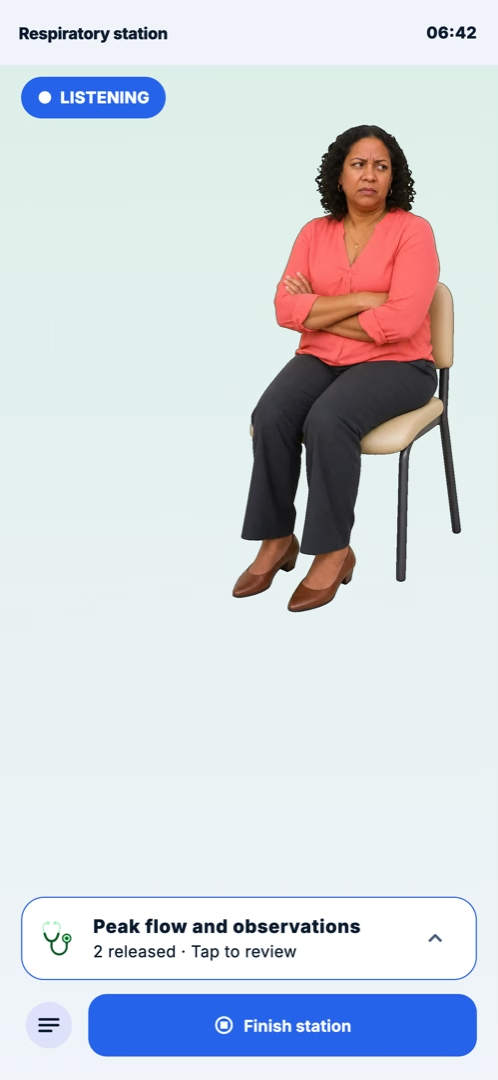


The things candidates ask at 11pm.
Format, marking and how to use OSCEY next to your other revision. The full FAQ covers the app itself.
What is the format of PLAB 2?
An OSCE of 18 stations: 16 scored, 2 rest. About 90 seconds outside each door to read the task, then 8 minutes inside with the patient. The circuit takes roughly three hours.
Where is PLAB 2 held?
Only at the GMC's assessment centre in Manchester, UK. You book through GMC Online after passing PLAB 1 — and places go quickly, so book as early as you can.
How is PLAB 2 marked?
Each station is marked on three domains: data gathering, technical and assessment skills; clinical management skills; and interpersonal skills. To pass you need the overall pass score for your sitting and passes in at least 10 of the 16 scored stations.
Does OSCEY use real PLAB 2 cases?
No. Every station is an original, simulated case built to the published PLAB 2 shape — same timings, same task style, same three marking domains. OSCEY is independent and not affiliated with or endorsed by the GMC.
Can I run a full PLAB 2 mock circuit?
Yes. A PLAB 2 mock circuit in OSCEY is the full 18-slot shape: 16 scored stations, 2 timed rests where they fall in a real circuit, 90 seconds of reading and 8 minutes per station. It is the closest thing to the Manchester day you can do on a sofa.
How does OSCEY fit with question banks and courses?
Use banks to build knowledge and OSCEY to rehearse the performance. Reading about a chest pain station is not the same as opening it, taking the history out loud and explaining your plan in eight minutes. OSCEY trains the part the examiner actually watches.
When should I start practising out loud?
Earlier than feels comfortable. Most candidates know enough medicine weeks before they can perform it fluently. Speaking a consultation is a separate skill, and it only improves with repetitions — which is what OSCEY is for.
Is an OSCEY score a prediction of my result?
No. OSCEY scores are practice estimates based on checklist coverage in a single simulated station. They are not official results, not predictions, and not clinical advice.
Preparing for a different circuit?
The door opens when the reading clock ends.
Download OSCEY, run a free preview station at PLAB 2 pace, and see what eight minutes really feels like.
OSCEY simulates patients. Your microphone audio is processed by Google Gemini to run the consultation and is not retained after the station. OSCEY provides practice feedback and practice score estimates only — not an official exam result, not a prediction, and not clinical advice. Not affiliated with or endorsed by the GMC or any other examining body. Confirm the current PLAB 2 format in the official GMC guide before your sitting.
